Gold has long been regarded as a unique asset class, serving as a store of value, a hedge against inflation, and a safe haven during times of uncertainty. However, the price of gold is not driven by a single factor but by a complex interplay of economic, financial, and behavioural variables. This article provides a comprehensive, conditional framework for understanding the key drivers behind gold prices, offering intermediate-level insights into their mechanisms, interactions, and implications.
Real and Nominal Yields: The Opportunity Cost of Holding Gold
Gold does not generate income or dividends, making its opportunity cost a critical factor in price dynamics. Real yields—that is, nominal yields adjusted for inflation—are particularly influential. When real yields on government bonds rise, the opportunity cost of holding non-yielding gold increases, often putting downward pressure on gold prices. Conversely, declining or negative real yields tend to support higher gold prices as investors seek alternatives to low or negative real returns on bonds.
Nominal yields also matter but can be misleading if inflation expectations shift. For example, rising nominal yields driven by higher inflation expectations may not necessarily hurt gold prices if real yields remain low or negative.
Mechanism and Example
Consider a scenario where 10-year Treasury yields increase from 1% to 3%, but inflation expectations rise from 2% to 4%. Real yields fall from -1% to -1%, effectively unchanged and negative, which can maintain or increase gold’s appeal despite higher nominal yields.
The US Dollar: Inverse Correlation and Currency Effects
Gold is typically priced in US dollars, so the strength of the USD inversely affects gold prices. A stronger dollar makes gold more expensive in other currencies, reducing demand and putting downward pressure on prices. Conversely, a weaker dollar tends to boost gold prices by making it cheaper for holders of other currencies.
This inverse relationship is not absolute and can be influenced by other factors such as global risk sentiment and monetary policy divergences.
Inflation and Inflation Expectations
Gold is often viewed as an inflation hedge. Rising inflation or expectations thereof can increase demand for gold as a store of value. However, the relationship is nuanced. If inflation rises alongside real yields, the net effect on gold prices may be muted or negative.
Investors monitor breakeven inflation rates derived from inflation-protected securities to gauge market inflation expectations, which can influence gold demand.
Monetary Policy Expectations and Transmission
Central bank policies shape gold prices through interest rates, quantitative easing, and forward guidance. Expectations of looser monetary policy or delayed rate hikes tend to support gold by lowering real yields and increasing liquidity.
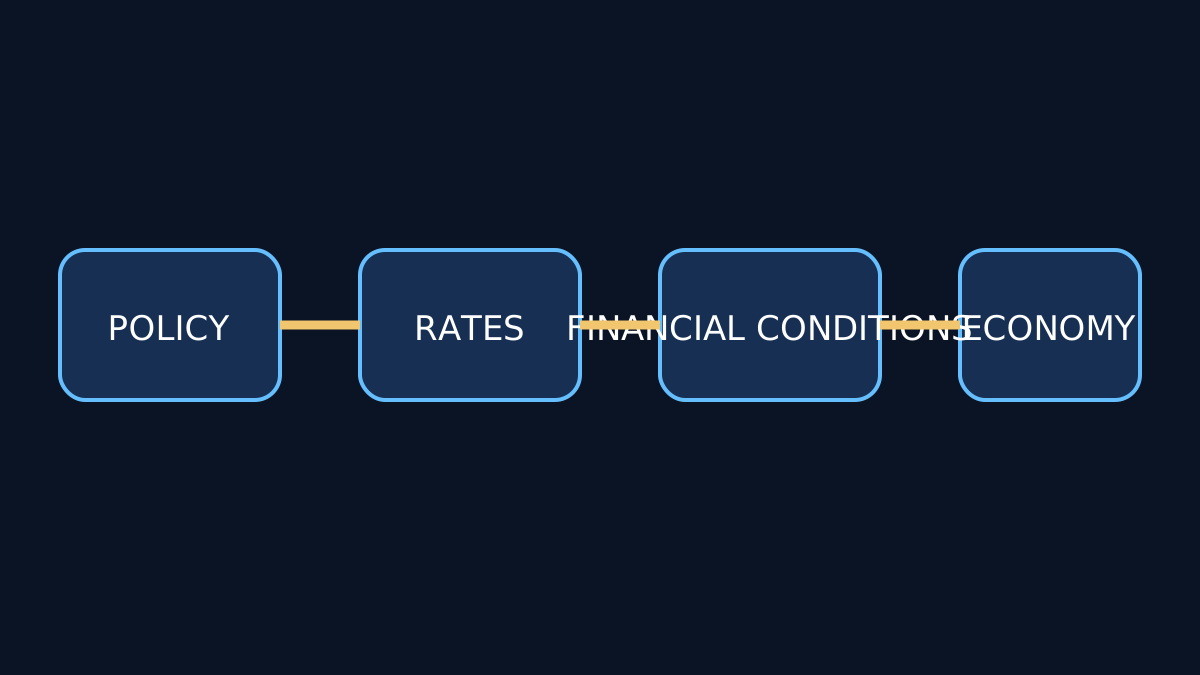
Conversely, tightening monetary policy or aggressive rate hikes can weigh on gold by increasing real yields and strengthening the dollar.
Safe-Haven and Liquidity Demand
Gold’s role as a safe haven becomes prominent during periods of financial stress, geopolitical tensions, or market volatility. In such times, demand for gold can surge irrespective of yields or inflation dynamics, driven by its perceived reliability and liquidity.
Liquidity demand can also influence short-term price movements, especially during crises when investors seek quick access to cash or collateral.
Central Bank and Investment Flows
Central banks are significant holders and buyers of gold, influencing supply-demand balances. Their purchases often reflect strategic diversification away from fiat currencies or geopolitical considerations.
Similarly, investment flows via exchange-traded funds (ETFs), futures markets, and private investment can amplify price movements. Large inflows can push prices higher, while outflows can exert downward pressure.
Jewellery and Industrial Demand
Physical demand for gold in jewellery and industry accounts for a substantial portion of annual consumption. Jewellery demand is often seasonal and influenced by cultural factors, income growth, and price levels. Industrial demand, while smaller, is linked to electronics and medical applications.
These sources provide steady baseline demand but typically do not drive short-term price fluctuations.
Mine Production and Recycling Supply
Gold supply is relatively inelastic in the short term. Mine production grows slowly due to exploration, development timelines, and capital intensity. Recycling supply varies with price incentives; higher gold prices encourage more recycling, increasing supply.
Supply shocks, such as mine strikes or geopolitical disruptions, can impact prices but are less frequent.
Futures and Spot Markets: Positioning and Sentiment
Gold prices are determined in spot markets but influenced heavily by futures contracts and derivatives. Futures markets allow investors to speculate on price direction and hedge exposure.
Positioning data, such as net long or short positions by speculators, can signal market sentiment and potential price reversals. However, these indicators should be interpreted cautiously as they reflect expectations rather than fundamentals.
Conflicting Drivers and Scenario Analysis
Gold’s price drivers often conflict. For example, rising inflation may support gold, while simultaneous monetary tightening and rising real yields may suppress it. Understanding these conditional relationships is key to interpreting price movements.
Scenario analysis helps by considering combinations of factors:
- Scenario A: Rising inflation with stable or falling real yields and a weakening USD supports higher gold prices.
- Scenario B: Strong economic growth, rising real yields, and a strong USD may weigh on gold.
- Scenario C: Geopolitical tensions and market volatility can boost gold regardless of yields or inflation.
Limitations and Common Misinterpretations
It is important to avoid deterministic conclusions. Gold prices reflect market consensus and expectations, which can change rapidly. Overemphasis on a single factor, such as inflation alone, can mislead investors.
Moreover, short-term price volatility may not align with fundamental drivers due to speculative flows or technical factors.
Key Takeaways
For further reading on related topics, see our articles on Understanding Real Yields and Monetary Policy and Markets.