The Federal Reserve System, often simply called the Fed, is the central bank of the United States. It plays a pivotal role in shaping the nation's monetary policy, supervising financial institutions, and maintaining financial stability. Understanding its structure and functions is essential for grasping how monetary policy influences the economy and financial markets.
Structure of the Federal Reserve System
The Federal Reserve System comprises three key components:
- Board of Governors: A seven-member board appointed by the President and confirmed by the Senate, responsible for guiding the Fed's policies and overseeing the Federal Reserve Banks.
- 12 Regional Reserve Banks: Located across the country, these banks implement the Fed's policies, supervise regional banks, and provide financial services.
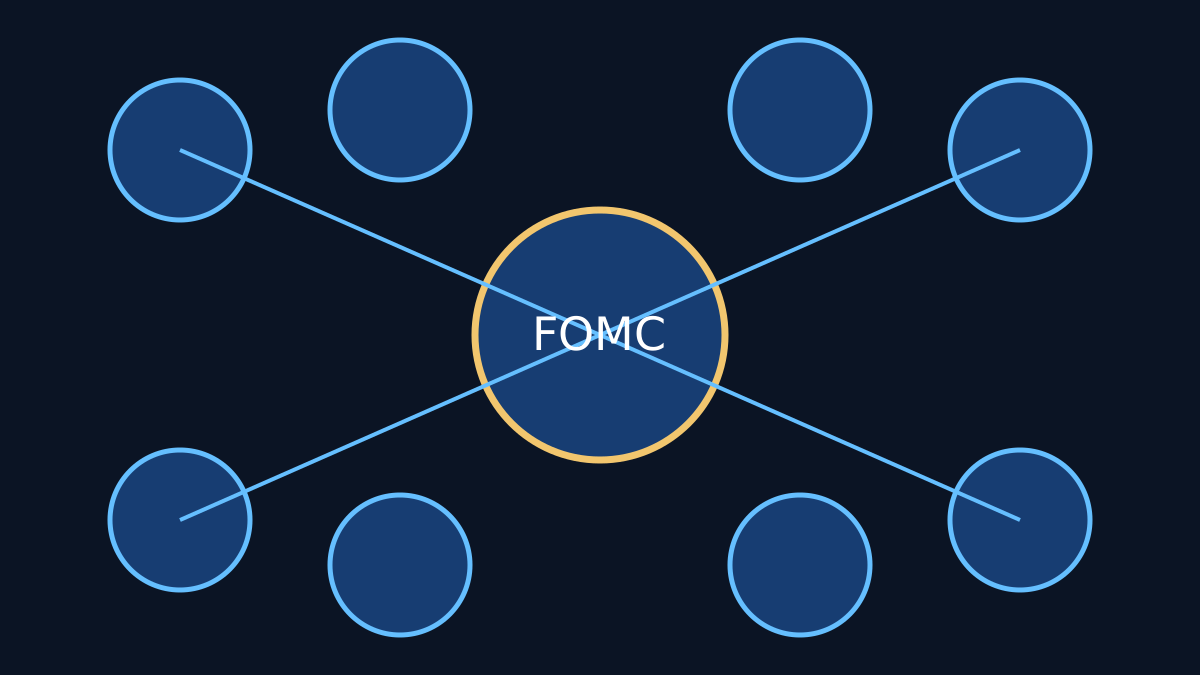
- Federal Open Market Committee (FOMC): The policymaking body that sets the federal funds target range and directs open market operations.
The Congressional Dual Mandate
Congress has tasked the Federal Reserve with a dual mandate: to promote maximum employment and to maintain stable prices. These goals guide the Fed’s monetary policy decisions, balancing growth with inflation control. The Fed also aims for moderate long-term interest rates, which support sustainable economic expansion.
Monetary Policy Tools
Federal Funds Target Range
The federal funds rate is the interest rate at which banks lend reserve balances to each other overnight. The FOMC sets a target range for this rate to influence overall financial conditions. Adjusting this target range affects borrowing costs, spending, and investment decisions across the economy.
Interest on Reserve Balances (IORB)
The Fed pays interest on reserve balances that banks hold at the central bank. The IORB rate sets a floor for the federal funds rate because banks would not lend reserves at rates below what they can earn risk-free from the Fed. This tool helps the Fed maintain the federal funds rate within its target range.
Open Market Operations
Open market operations involve the Fed buying or selling government securities to adjust the supply of reserves in the banking system. These operations are the primary means of implementing monetary policy and steering short-term interest rates.
Quantitative Easing and Tightening (QE/QT)
When short-term interest rates approach the effective lower bound, the Fed may engage in quantitative easing by purchasing longer-term securities to lower longer-term interest rates and stimulate the economy. Conversely, quantitative tightening involves reducing the Fed’s balance sheet by allowing securities to mature without reinvestment, tightening financial conditions.
Policy Guidance and Transmission Mechanisms
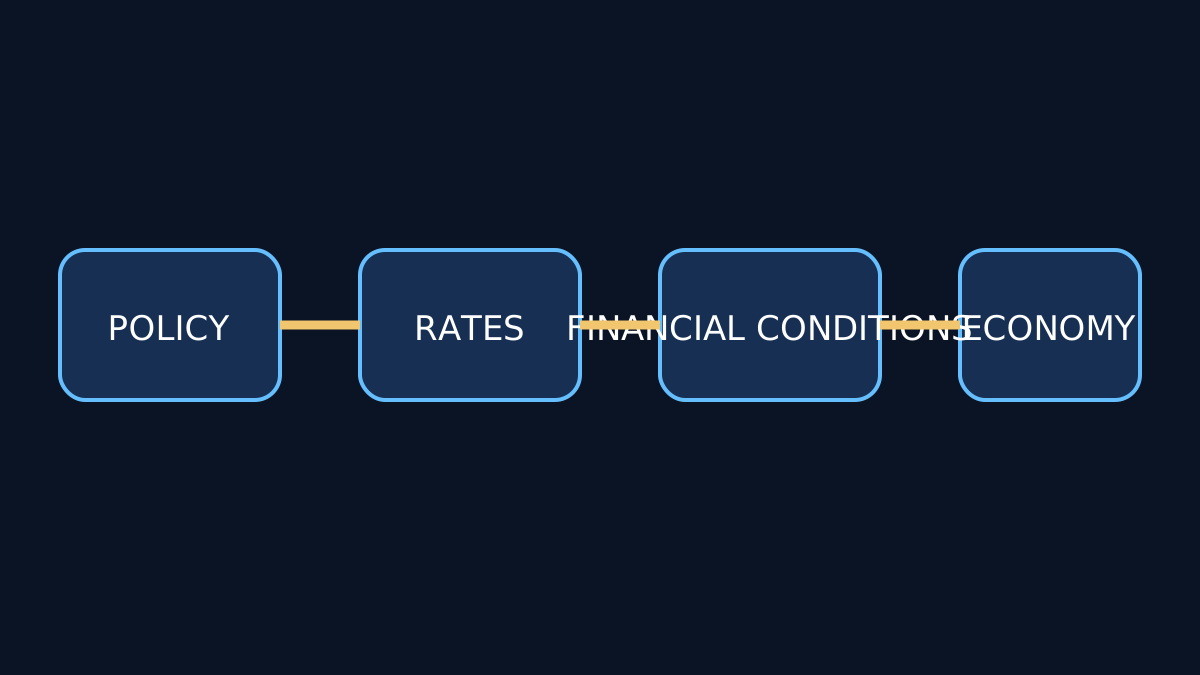
The Fed communicates its policy intentions through forward guidance, which shapes market expectations about future interest rates and economic conditions. These expectations influence yields across the maturity spectrum, credit availability, and ultimately, consumer and business demand.
Transmission Through Short Rates and Yields
Changes in the federal funds rate ripple through other interest rates, including those on mortgages, auto loans, and corporate bonds. This affects borrowing costs for households and businesses, influencing spending and investment decisions.
Credit Conditions and Demand
Monetary policy also affects credit availability. Easier policy can encourage lending and borrowing, boosting demand, while tighter policy can restrain credit growth and slow economic activity.
Market and Asset Class Effects
The Fed’s policies have complex and conditional effects on various asset classes:
- US Dollar (USD): Higher interest rates tend to strengthen the USD by attracting capital inflows, but global factors and market sentiment also play significant roles.
- Bonds: Rising rates generally lead to falling bond prices, but the magnitude depends on duration and market expectations.
- Gold: Often seen as an inflation hedge, gold prices may decline when rates rise due to higher opportunity costs, though geopolitical and inflation concerns can override this.
- Equities: Higher rates can increase borrowing costs and discount future earnings, potentially weighing on stock prices, but economic growth and corporate profitability remain key drivers.
- Cryptocurrencies: These remain highly speculative and can react variably to monetary policy, influenced by risk sentiment and regulatory developments.
Why Simple Narratives Fail
Monetary policy’s effects are nuanced and depend on the broader economic context, market expectations, and global developments. Simplistic interpretations—such as "Fed hikes always cause stocks to fall"—ignore these conditional dynamics and can mislead investors and observers.
Limitations and Common Misunderstandings
While the Fed has powerful tools, it cannot control all economic outcomes. Factors like fiscal policy, global economic conditions, and structural changes also shape economic performance. Moreover, the lag between policy actions and their effects complicates timely decision-making.
Further Reading
For a deeper dive into related topics, see our articles on Understanding Interest Rates and Monetary Policy Basics.
Key Takeaways
- The Federal Reserve System consists of the Board of Governors, 12 Reserve Banks, and the FOMC, which sets monetary policy.
- Its dual mandate focuses on maximum employment and price stability.
- Monetary policy tools include the federal funds target range, interest on reserve balances, and open market operations.
- Quantitative easing and tightening influence longer-term rates when short-term rates are near zero.
- Policy impacts financial markets and the economy through complex transmission channels, making simple cause-effect narratives inadequate.