ANAKO offers a comprehensive and authenticated workflow for crypto signals designed to support informed decision-making within a subscribed environment. This guide details the components and mechanisms of the ANAKO crypto signals system, emphasizing the importance of understanding signal reading directions, lifecycle statuses, and risk considerations without implying guaranteed results.
Understanding the ANAKO Crypto Signals Workflow
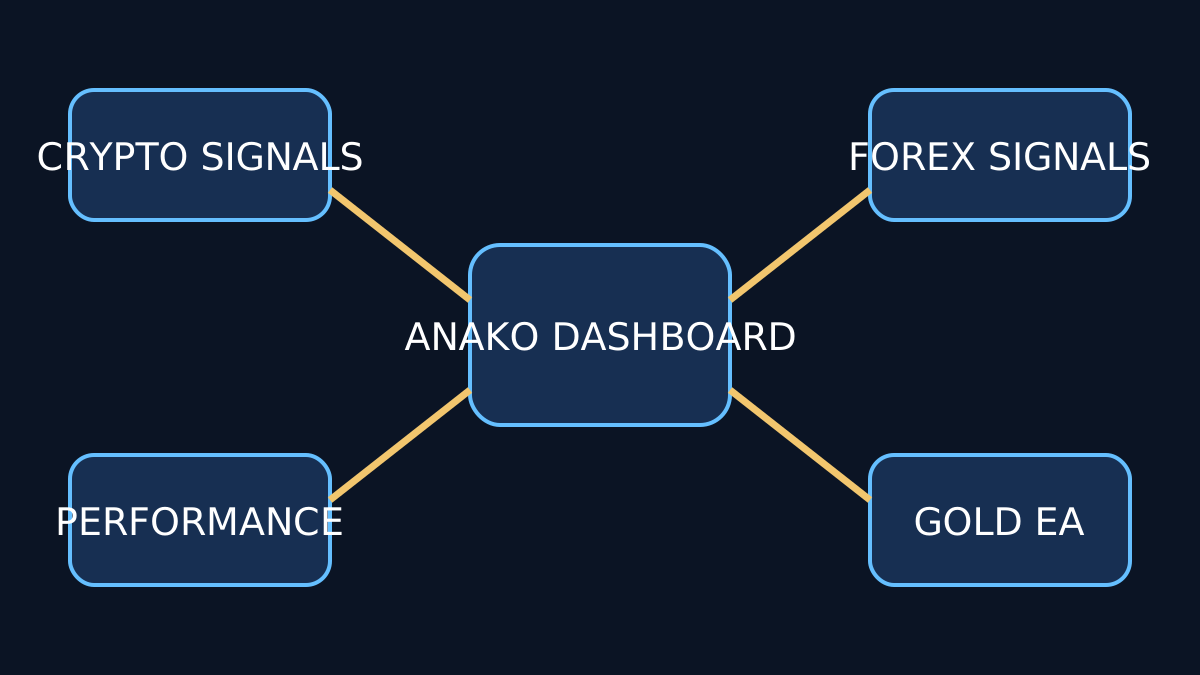
ANAKO’s crypto signals are accessible exclusively through an authenticated and subscribed Dashboard, ensuring that users receive verified and timely information. The workflow encompasses several key pages and features:
- Signals List: A curated list of active and historical signals available to subscribers.
- Signal Detail: Comprehensive information on individual signals, including entry points, stop-loss levels, and target prices.
- TradingView Route: Direct integration with TradingView charts to visualize signals in real-time market contexts.
- Signal Output, Symbols, and Analytics Pages: Analytical tools and symbol-specific data to assist in evaluating signal performance.
- Public Signal Performance: Transparent performance metrics accessible to all users, fostering trust and accountability.
It is important to note that manual execution of trades based on signals is optional and occurs through separate trading routes. These require careful consideration and are not part of the automated ANAKO workflow.
Key Components of a Crypto Signal
Reading Direction and Signal Structure
Each ANAKO crypto signal includes a reading direction that indicates the expected market movement, typically categorized as long (anticipating price increase) or short (anticipating price decrease). Understanding this direction is fundamental to interpreting the signal correctly.
Entry, Stop, and Target Levels
The signal plan is composed of three essential price levels:
- Entry: The recommended price point to initiate a position.
- Stop: The predefined price level to limit potential losses, serving as a risk control mechanism.
- Targets: One or more price levels where profits may be taken, reflecting the signal’s profit objectives.
These components form the basis of the trade plan embedded within each signal, but users must apply their own judgment and risk tolerance when considering execution.
Lifecycle and Status Awareness
Signals undergo a lifecycle that includes statuses such as active, closed, or cancelled. Awareness of these statuses is crucial for subscribers to manage their engagement with each signal appropriately.
- Active: The signal is currently valid and actionable.
- Closed: The signal has reached its conclusion, either by hitting targets or stops.
- Cancelled: The signal has been withdrawn or invalidated due to changing market conditions.
Risk Checks and Limitations
ANAKO’s signals are designed to provide structured market insights but do not guarantee outcomes. Users should perform independent risk assessments and consider market volatility, liquidity, and other external factors.
Common limitations and errors include:
- Misinterpretation of signal direction or price levels.
- Ignoring lifecycle status updates leading to outdated actions.
- Overreliance on signals without complementary analysis.
- Manual execution errors when deviating from the recommended workflow.
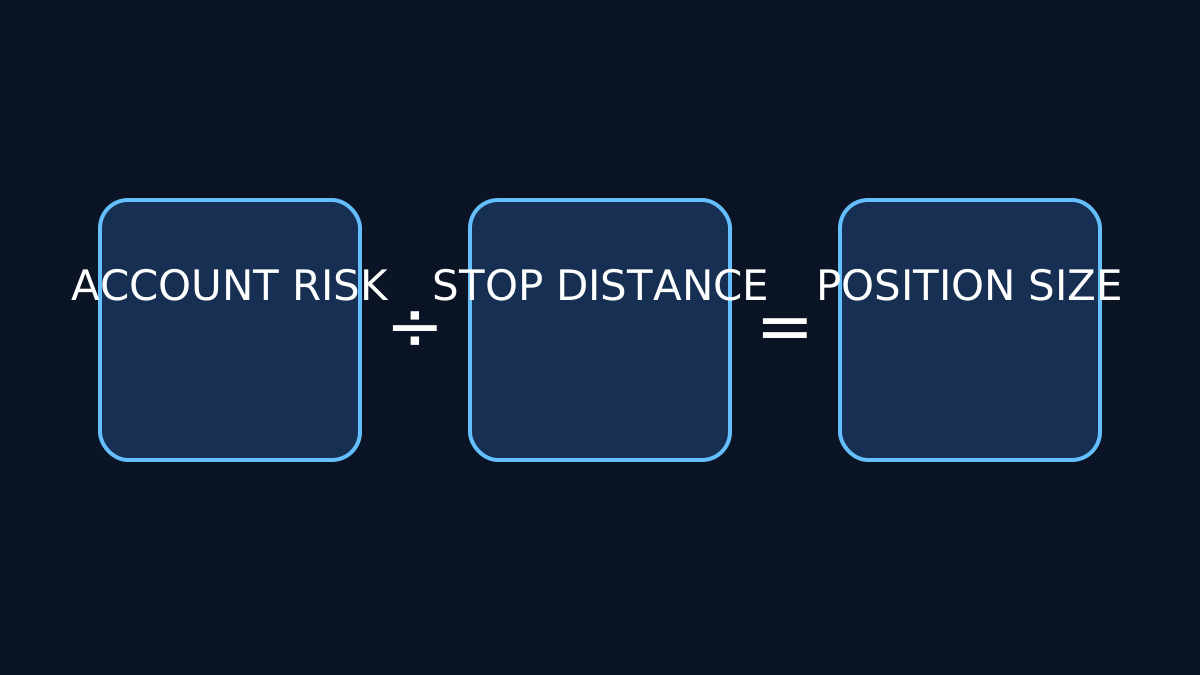
For detailed guidance on position sizing and risk management, see our related article Position Sizing Best Practices.
Integration With TradingView and Analytics
The dedicated TradingView route allows users to visualize signals directly on interactive charts, facilitating real-time market analysis. The Analytics page offers aggregated data on signal performance, symbol trends, and historical outcomes, supporting a data-driven approach.
Subscribers can access the Public Signal Performance page to review transparent metrics, fostering informed evaluation of signal reliability over time.
Conclusion
The ANAKO crypto signals system provides a verified and structured approach to market signals within an authenticated subscription framework. By understanding signal components, lifecycle statuses, risk considerations, and proper use of integrated tools such as TradingView, users can better navigate the complexities of crypto trading signals. However, it remains essential to approach signals as informative guides rather than deterministic instructions, applying personal judgment and comprehensive risk management.
Key Takeaways
- ANAKO crypto signals are accessible only via authenticated dashboards to ensure verified data.
- Signals include entry, stop-loss, and target levels with a clear reading direction (long/short).
- Signal lifecycle statuses (active, closed, cancelled) inform appropriate user actions.
- Risk checks and independent analysis are critical; signals do not guarantee outcomes.
- TradingView integration and analytics pages enhance signal visualization and performance tracking.
- Manual trade execution is optional and requires cautious, separate handling.
For further insights on crypto trading strategies and risk management, visit our Crypto Trading Strategies series.