The Federal Open Market Committee (FOMC) plays a pivotal role in shaping financial markets through its monetary policy decisions. Understanding the mechanisms behind FOMC meetings, statements, and projections is essential for grasping how markets react and why price movements sometimes defy headline expectations.
Scheduled FOMC Meetings and Their Outputs
The FOMC convenes regularly, typically eight times a year, to assess economic conditions and set monetary policy. These meetings culminate in several key communications:
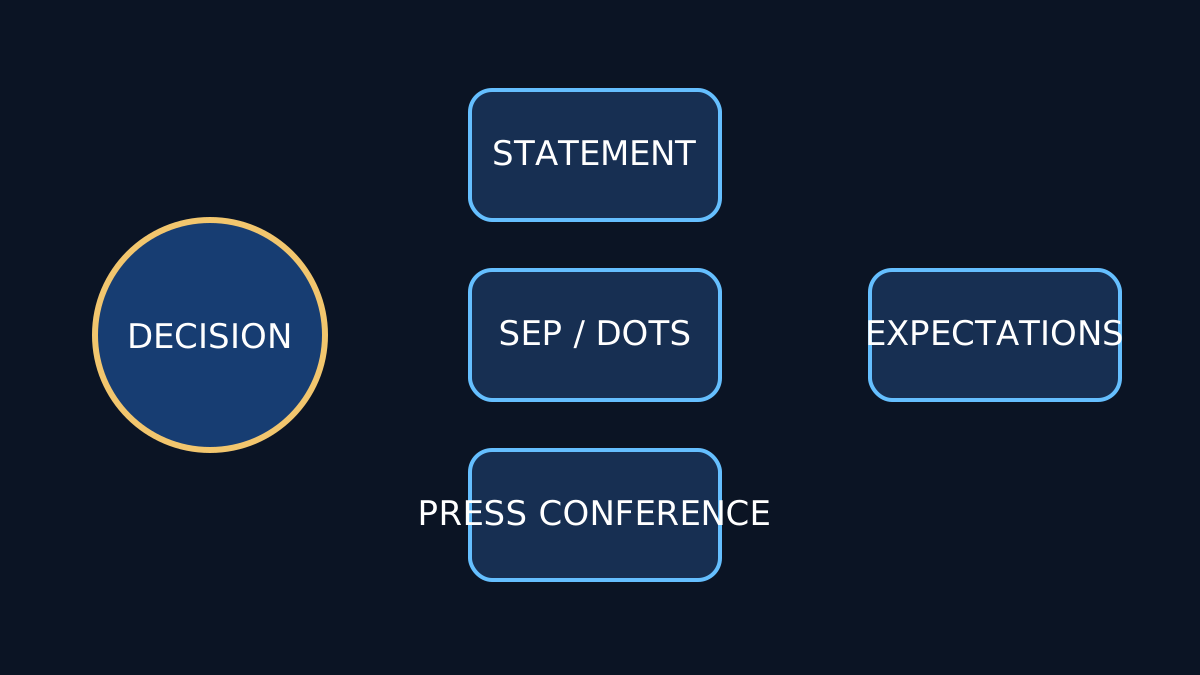
- Policy Statement: A concise summary of the Committee’s economic outlook and policy stance, including any changes to the federal funds target range.
- Target-Range Decision: The announcement of the federal funds rate target range, which guides short-term interest rates.
- Implementation Note: Details on how the Federal Reserve intends to implement its policy decisions, often clarifying operational aspects.
- Summary of Economic Projections (SEP): Released quarterly, this report includes forecasts for GDP growth, unemployment, inflation, and the appropriate path for the federal funds rate.
- Dot Plot: A graphical representation within the SEP showing each voting member’s individual projections for the federal funds rate over the next few years.
- Press Conference: The Chair’s briefing following some meetings provides qualitative insights, clarifies policy intentions, and answers media questions.
Voting Members and Decision-Making
The FOMC consists of 12 voting members: the seven members of the Board of Governors and five Reserve Bank presidents on a rotating basis. Each member’s vote reflects their economic outlook and policy preferences, which are aggregated into the Committee’s decisions and projections.
Hawkish vs. Dovish: Relative Policy Stances
Market participants often describe FOMC decisions as hawkish or dovish. These terms are relative to market expectations:
- Hawkish: Indicates a stance favoring tighter monetary policy, such as higher interest rates or reduced asset purchases, typically to combat inflation.
- Dovish: Suggests a preference for looser policy, such as lower rates or accommodative measures to support growth and employment.
Whether a decision is hawkish or dovish depends on how it compares to consensus forecasts and market pricing prior to the announcement.
Interpreting Real Yields and Market Reactions
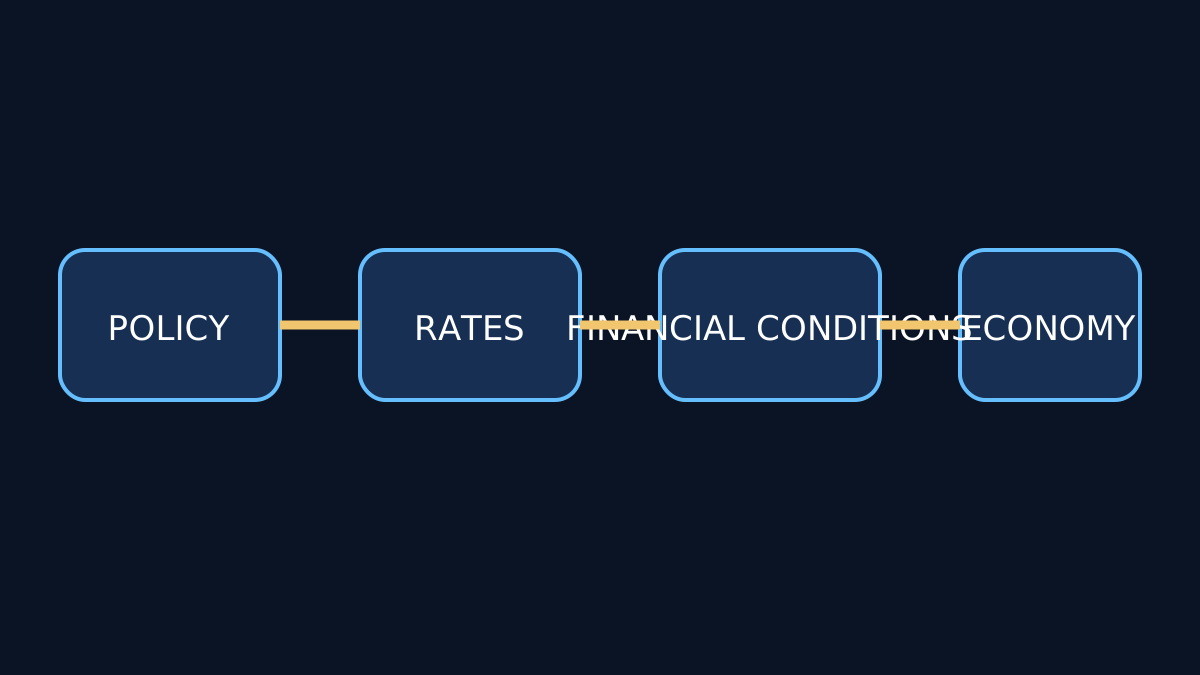
Real yields—nominal yields adjusted for inflation expectations—are crucial for understanding the impact of FOMC decisions. Changes in policy influence real yields, which in turn affect borrowing costs, investment valuations, and currency strength.
However, markets can move counterintuitively. For example, a rate hike might initially depress equities but could later boost them if it signals confidence in economic growth. Conversely, a dovish statement might lift equities but weaken the currency if it raises inflation concerns.
Why Markets Sometimes Move Opposite the Headline
Several factors contribute to seemingly paradoxical market moves:
- Forward Guidance: The FOMC’s communication shapes expectations about future policy, which can have a larger impact than the immediate decision.
- Market Positioning: Traders’ existing positions and risk sentiment influence how new information is priced.
- Conditionality: The Committee’s emphasis on economic data dependency means markets interpret statements as conditional rather than deterministic.
Channels of Impact on Key Asset Classes
US Dollar (USD)
FOMC decisions influence the USD primarily through interest rate differentials and expectations of future policy. Hawkish signals generally strengthen the USD as higher yields attract capital inflows, while dovish signals can weaken it.
Bonds
Bond prices and yields react sensitively to changes in the federal funds rate and the outlook for inflation. An unexpected hawkish move can push yields higher and prices lower, while dovish surprises tend to have the opposite effect.
Gold
Gold is often viewed as an inflation hedge and a safe haven. Higher real yields, typically associated with hawkish policy, increase the opportunity cost of holding gold, pressuring its price. Conversely, dovish policy can support gold by lowering real yields.
Equities
Equity markets respond to FOMC decisions through the lens of economic growth prospects and financing costs. Tightening can weigh on valuations, especially for growth stocks, while easing tends to support equity prices.
Cryptocurrencies
Crypto assets are influenced by monetary policy indirectly through risk sentiment and USD strength. Hawkish moves may dampen speculative demand, while dovish policy can encourage risk-taking.
Limitations and Common Misinterpretations
While FOMC communications are authoritative, several limitations exist:
- Data Dependency: The Committee’s conditional approach means decisions depend on evolving economic data, making forward guidance inherently uncertain.
- Market Overreaction: Short-term volatility can exaggerate the significance of statements or projections.
- Complex Interactions: Global factors and other central banks’ policies also influence markets, complicating attribution.
Common errors include interpreting the dot plot as a commitment rather than a snapshot of individual views, or assuming immediate market moves reflect long-term trends.
Further Resources
For detailed schedules and official releases, consult the FOMC calendar and the Federal Reserve’s monetary policy page. To deepen your understanding of market responses, explore related articles on our Market Reactions and Interest Rates pages.