Leverage and margin are foundational concepts in trading and investing, enabling traders to control larger positions than their actual capital would otherwise allow. Understanding these concepts is crucial for managing risk and making informed decisions. This article explains leverage, margin components, margin levels, notional exposure, unrealized profit and loss (PnL), liquidation risks, margin types, and common pitfalls—all tailored for beginners.
What Is Leverage?
Leverage is the use of borrowed funds to increase the size of a trading position beyond what your own capital would permit. Expressed as a ratio (e.g., 10:1), leverage magnifies both potential gains and potential losses. For example, with 10x leverage, a $1,000 investment controls a $10,000 position.
Leverage vs. Position Size
It's important to distinguish leverage from position size. Position size is the total value of the asset controlled, while leverage is the ratio of that position size to your own margin (collateral). Increasing leverage increases risk because losses are amplified relative to your capital.
Understanding Margin
Margin is the collateral you must deposit to open and maintain a leveraged position. It acts as a security deposit to cover potential losses.
Initial Margin
The initial margin is the minimum amount required to open a position. It depends on the leverage level and position size. For example, with 10x leverage, the initial margin is 10% of the position size.
Used Margin and Free Margin
Used margin is the portion of your collateral currently allocated to open positions. Free margin is the remaining collateral available to open new positions or absorb losses. Free margin = Equity – Used Margin.
Margin Level
Margin level is a percentage that indicates the health of your position, calculated as (Equity / Used Margin) × 100%. A higher margin level means more buffer against liquidation.
Notional Exposure and Unrealized PnL
Notional exposure is the total value of the assets controlled by your position, including borrowed funds. It reflects the scale of your market exposure.
Unrealized PnL refers to the profit or loss on open positions that has not yet been realized by closing the trade. It fluctuates with market prices and affects your equity and margin level.
Liquidation and Stop-Out
Liquidation or stop-out occurs when your margin level falls below a critical threshold, causing your broker or platform to close positions automatically to prevent further losses. This threshold varies by platform and is designed to protect both the trader and the broker.
Cross Margin vs. Isolated Margin
Cross margin uses the full available balance in your account to maintain positions, allowing margin to be shared across trades. This reduces the risk of liquidation but exposes your entire balance.
Isolated margin confines margin to a specific position. Losses are limited to the margin allocated to that position, protecting the rest of your account but increasing the risk of liquidation for that trade.
Fees and Funding Considerations
Trading on margin often involves fees such as interest on borrowed funds or funding rates in perpetual contracts. These costs can accumulate over time and affect profitability. Understanding fee structures is essential before using leverage.
Correlated Positions and Risk Management
Holding multiple positions in correlated assets can increase risk exposure, as losses in one position may coincide with losses in another. Proper diversification and risk assessment are vital to avoid unintended leverage effects.
Worked Example: Calculating Margin and Leverage
Suppose you want to open a position worth $10,000 with 10x leverage. Your initial margin required is $1,000 (10% of $10,000). If the market moves against you by 5%, your position loses $500, reducing your equity to $500. Your margin level drops accordingly, increasing the risk of liquidation if losses continue.
Common Misconceptions
- Leverage guarantees profits: Leverage amplifies both gains and losses; it does not guarantee profits.
- Higher leverage is always better: Higher leverage increases risk and potential for liquidation.
- Margin is the same as borrowing money: Margin is collateral, not a loan itself, though it enables borrowing.
Limitations and Risk Warnings
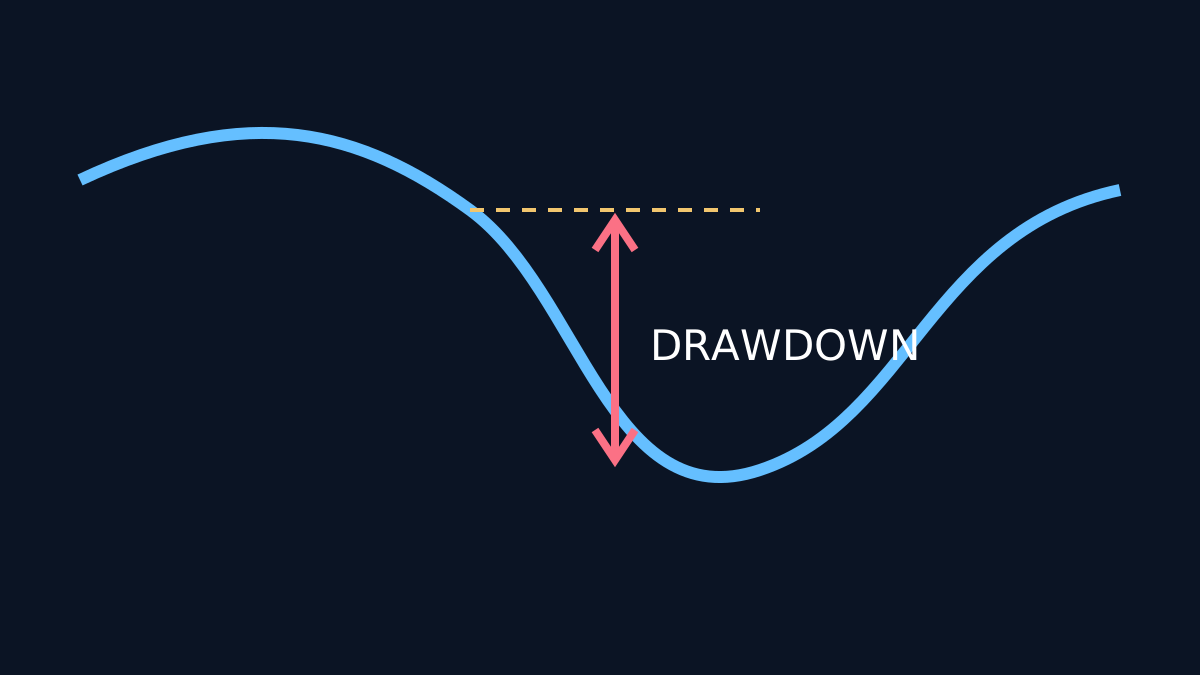
Leverage magnifies market volatility effects and can lead to rapid losses exceeding your initial investment. Always use leverage cautiously and understand platform-specific rules. Margin requirements and liquidation thresholds vary, so consult your broker’s documentation.
Further Reading
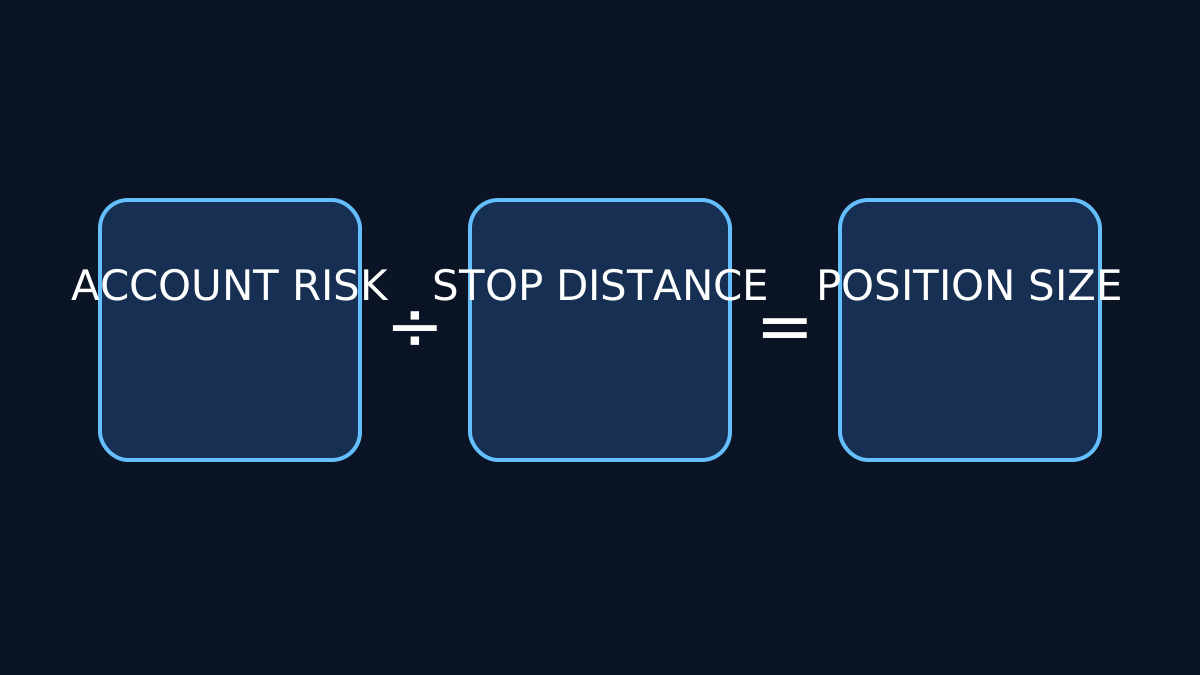
For more detailed insights on managing risk and position sizing, see our Position Sizing Guide and Risk Management Strategies.
Key Takeaways
- Leverage allows control of larger positions but increases risk.
- Margin is collateral required to open and maintain leveraged positions.
- Margin level indicates the health of your position and risk of liquidation.
- Cross margin shares collateral across positions; isolated margin limits risk to individual trades.
- Understand fees, correlated risks, and platform rules before trading with leverage.