Position sizing is a fundamental concept in trading that determines how much capital you allocate to a single trade. Whether you trade forex or cryptocurrencies, understanding position sizing helps you manage risk, protect your capital, and improve your chances of long-term success.
What Is Position Sizing?
Position sizing refers to the number of units, contracts, or lots you buy or sell in a trade. It directly influences your potential profit or loss because it determines how much market movement affects your account balance.
In simple terms, position size answers the question: How many units should I trade to risk only a predetermined amount of my capital?
Key Concepts in Position Sizing
Risk Budget
Your risk budget is the maximum amount of your trading capital you are willing to lose on a single trade. This is often expressed as a percentage of your total account balance, for example, 1% or 2%. Setting a risk budget helps prevent catastrophic losses and preserves your ability to trade over time.
Entry-to-Stop Distance
This is the difference between your entry price and your stop-loss price. The stop-loss is a predefined price level where you exit the trade to limit losses. The distance is usually measured in pips for forex or ticks for cryptocurrencies.
Pip and Tick Value
A pip (percentage in point) is the smallest price increment in forex, typically 0.0001 for most currency pairs. A tick is the minimum price movement in crypto or futures contracts. Knowing the monetary value of one pip or tick for your contract size is essential for calculating risk.
Contract Specifications
Different trading venues and instruments have varying contract sizes, minimum increments, and fee structures. For example, a standard forex lot is 100,000 units of the base currency, while crypto contracts may be fractional or fixed sizes. Fees and commissions also affect your net exposure and should be included in calculations.
Leverage Versus Risk
Leverage amplifies your exposure relative to your capital but does not change your risk budget. High leverage can lead to larger losses if position sizing is not adjusted accordingly. Always calculate position size based on your risk tolerance, not just available leverage.
Rounding to Venue Increments
Trading platforms often require position sizes to be rounded to specific increments, such as whole lots or minimum contract sizes. After calculating your ideal position size, round it down to the nearest allowed increment to avoid over-risking.
Correlated Exposure
Holding multiple positions in correlated assets increases your overall risk beyond individual trade calculations. For example, trading EUR/USD and GBP/USD simultaneously exposes you to similar market moves. Adjust your position sizes accordingly to manage aggregate risk.
Gap and Slippage Limits
Market gaps and slippage can cause your stop-loss to execute at a worse price than expected, increasing losses. While position sizing cannot eliminate this risk, keeping position sizes conservative helps mitigate the impact of such events.
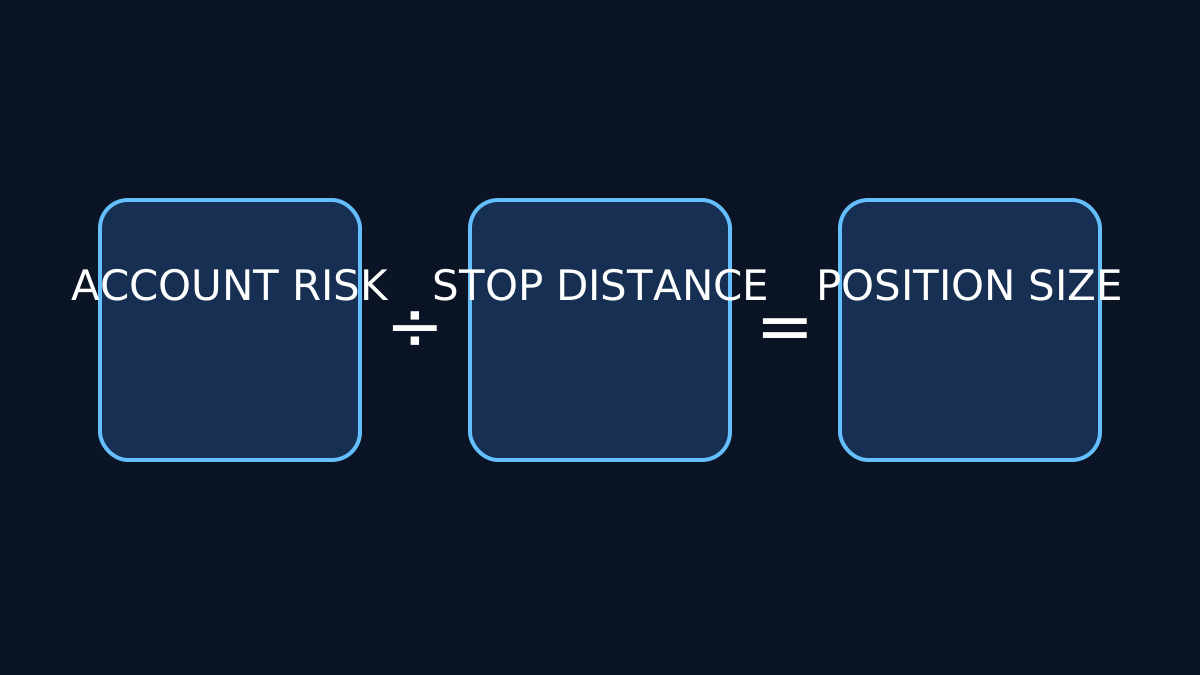
Calculating Position Size: A Step-by-Step Example
Let's walk through a hypothetical forex trade to illustrate position sizing:
- Account balance: $10,000
- Risk per trade: 1% ($100)
- Currency pair: EUR/USD
- Entry price: 1.1200
- Stop-loss price: 1.1150
- Stop distance: 50 pips (1.1200 - 1.1150)
- Pip value per standard lot: $10
Step 1: Calculate the dollar risk per pip:
Risk per pip = Risk per trade / Stop distance = $100 / 50 pips = $2 per pip
Step 2: Determine position size in lots:
Position size = Risk per pip / Pip value per lot = $2 / $10 = 0.2 lots
This means you should trade 0.2 standard lots to risk only 1% of your account if the stop-loss is hit.
Remember to adjust for fees and rounding to the nearest allowed increment on your trading platform.
Common Mistakes in Position Sizing
Ignoring Fees and Spreads
Failing to include commissions, spreads, or funding costs can underestimate your true risk. Always factor in these costs to avoid surprises.
Over-Leveraging
Using excessive leverage without adjusting position size can lead to outsized losses. Leverage increases exposure but does not increase your risk tolerance.
Neglecting Correlated Positions
Opening multiple trades in correlated instruments without adjusting sizes can multiply risk unknowingly.
Not Using Stop-Loss Orders
Position sizing assumes a predefined stop-loss. Trading without stops exposes you to unlimited losses and invalidates risk calculations.
Pre-Order Checklist for Position Sizing
- Define your risk budget per trade as a percentage of your capital.
- Identify your entry and stop-loss levels precisely.
- Calculate the entry-to-stop distance in pips or ticks.
- Know the pip/tick value for your contract size.
- Factor in fees, commissions, and spreads.
- Adjust for leverage but base calculations on risk tolerance.
- Round position size to the nearest allowed increment.
- Consider correlated exposures in your portfolio.
- Be aware of potential gaps and slippage risks.
Position Sizing in Cryptocurrency Trading
Cryptocurrency markets share many position sizing principles with forex but have unique characteristics:
- Volatility: Crypto prices can be more volatile, so stop distances and risk budgets may differ.
- Contract types: Spot trading, futures, and perpetual swaps have different contract specifications and margin requirements.
- Tick size and increments: Crypto exchanges often have minimum order sizes and tick increments that affect rounding.
- Fees: Maker and taker fees vary widely and impact net risk.
Applying rigorous position sizing in crypto trading helps manage the amplified risks inherent in these markets.
Further Learning
For more on risk management and trading psychology, explore our articles on Risk Management Basics and Trading Psychology.
Key Takeaways
- Position sizing controls how much capital you risk per trade and is crucial for risk management.
- Calculate position size using your risk budget, entry-to-stop distance, and pip/tick value.
- Adjust for fees, leverage, rounding increments, and correlated exposures.
- Use stop-loss orders consistently to define risk.
- Be mindful of gaps and slippage; keep position sizes conservative.