In the realm of trading, executing signals manually demands precision, discipline, and a structured approach to mitigate risks and optimise outcomes. ANAKO’s verified routes provide a reliable foundation for traders seeking to navigate the complexities of market orders without relying on automated connections. This article outlines an intermediate-level, safe manual workflow that emphasises careful interpretation, position sizing, order verification, and ongoing position management.
Understanding the Signal Detail
The starting point for any manual execution is a thorough reading of the Signal Detail. This includes the market or symbol, trade direction (long or short), entry price, stop-loss level, and one or more target prices. ANAKO’s verified routes ensure that these parameters are clearly defined and consistent, reducing ambiguity during execution.
Traders should approach the signal detail with a mindset of verification rather than assumption. For example, confirm the exact symbol notation as it may differ across exchanges or platforms. The direction must be explicitly noted—long implies buying with the expectation of price appreciation, short indicates selling or shorting anticipating a decline.
Optional Inspection via TradingView
While not mandatory, inspecting the signal on TradingView or similar charting tools can provide additional context. This includes visual confirmation of support and resistance levels, trendlines, and volume patterns that underpin the signal. Such inspection aids in understanding the rationale behind entry and stop levels, but should not override the verified signal parameters.
Accurate Copying of Signal Parameters
Manual execution requires meticulous copying of the following parameters:
- Market/Symbol: Ensure the ticker matches exactly the one specified in the signal.
- Direction: Confirm whether the trade is long or short.
- Entry Price: The price at which the position should be opened.
- Stop-Loss: The price level to limit downside risk.
- Targets: One or more price levels for partial or full profit-taking.
Errors in copying any of these details can lead to unintended exposure or premature position closure. Double-checking each element before placing orders is essential.
Calculating Position Size
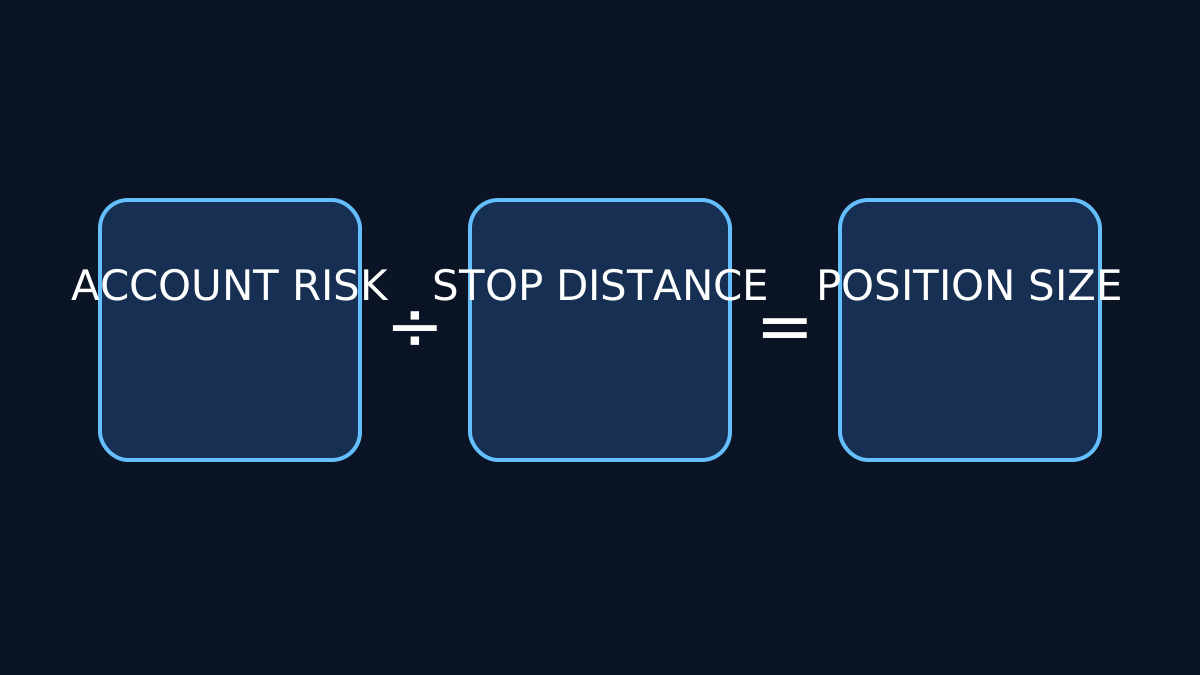
Position sizing is a critical risk management tool that determines how much capital to allocate to a trade based on the stop-loss distance and acceptable risk per trade. The calculation typically follows this formula:
Position Size = (Account Risk Amount) / (Entry Price - Stop-Loss Price)
For short positions, the stop-loss distance is the absolute difference between the stop-loss and entry price.
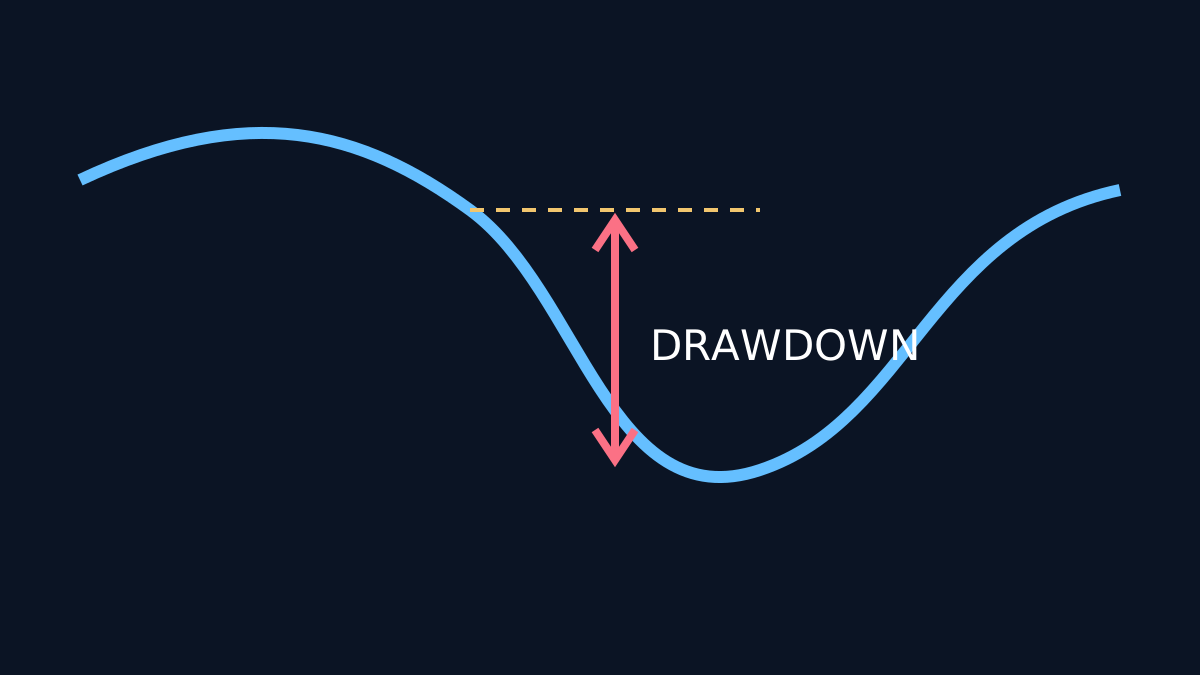
Traders should define their risk tolerance (e.g., 1-2% of account equity) before calculating position size. This approach helps contain drawdowns and preserve capital over time.
Verifying Order Types Before Execution
Manual traders must confirm the order type aligns with the signal’s intent. Common order types include:
- Market Orders: Executed immediately at the current market price, suitable for urgent entries or exits but may incur slippage.
- Limit Orders: Executed only at a specified price or better, allowing precise entry but risking non-execution.
- Stop Orders: Triggered when the price reaches a certain level, often used for stop-losses.
Choosing the correct order type depends on the signal’s parameters and current market conditions. For example, if the entry price is a limit level, placing a limit order is appropriate. Misalignment can result in missed opportunities or unintended fills.
Monitoring Active Positions and Status Changes
After order execution, continuous monitoring is essential. Use available trading-position interfaces to track:
- Open Position Size and Entry Price: Confirm the executed size matches the intended position.
- Stop-Loss and Target Levels: Ensure protective orders are in place.
- Partial Target Hits: When a partial target is reached, consider closing the corresponding portion of the position and adjusting stops accordingly.
- Status Changes: Be aware of order cancellations, expirations, or modifications.
Understanding these status changes helps maintain control and adapt to evolving market conditions without emotional bias.
Awareness of Cancellation and Expiration
Orders may be cancelled manually or expire if not filled within a specified timeframe. Traders should document reasons for cancellations or expirations to refine their approach. For example, a limit order may expire if the market price never reaches the entry level, which is not inherently negative but requires reassessment of market conditions.
Maintaining a Trading Journal
Journaling is a cornerstone of disciplined trading. Record all relevant details for each signal executed manually, including:
- Signal source and parameters
- Entry, stop-loss, and target prices
- Position size and risk calculations
- Order types used
- Execution times and fills
- Partial target hits and adjustments
- Reasons for cancellations or expirations
- Emotional state and observations
Consistent journaling enables pattern recognition, error correction, and performance improvement over time. It also supports accountability and objective review.
Common Errors and Limitations
Manual signal execution carries inherent risks, including:
- Copying Errors: Misrecording symbol or price details can lead to unintended trades.
- Slippage: Market orders may execute at unfavorable prices, especially in volatile markets.
- Emotional Interference: Deviating from the signal due to fear or greed compromises discipline.
- Delayed Execution: Manual processes may miss optimal entry points.
Recognising these limitations encourages the adoption of safeguards such as double-checking inputs, using limit orders where appropriate, and maintaining a calm, systematic approach.
Conclusion
Manual execution and management of trading signals using ANAKO’s verified routes demand a methodical workflow grounded in verification, risk management, and disciplined monitoring. By carefully reading signal details, optionally inspecting charts, calculating position sizes, verifying order types, and maintaining a detailed journal, traders can navigate the manual process more safely and effectively. While manual trading lacks the speed of automated systems, it offers control and learning opportunities essential for developing trading expertise.