Trading financial markets involves uncertainty and potential losses, making risk management a cornerstone of any trader’s strategy. This article introduces essential risk management concepts tailored for beginners, emphasizing practical tools and realistic expectations without promising profitability.
Understanding Risk Per Trade and Total Account Risk
Risk per trade refers to the maximum amount of capital a trader is willing to lose on a single trade. This is usually expressed as a percentage of the total trading account. Common conservative guidelines recommend risking no more than 1-2% of the account on any one trade to avoid large drawdowns.
Total account risk considers the cumulative exposure from all open positions. Managing this prevents overleveraging and catastrophic losses from correlated trades.
Stop Distance and Its Role
The stop distance is the price difference between the entry point and the stop-loss level. It determines how much the trader is risking per unit of the asset. A wider stop increases risk per share or contract, affecting position size.
Position Sizing: The Core Formula
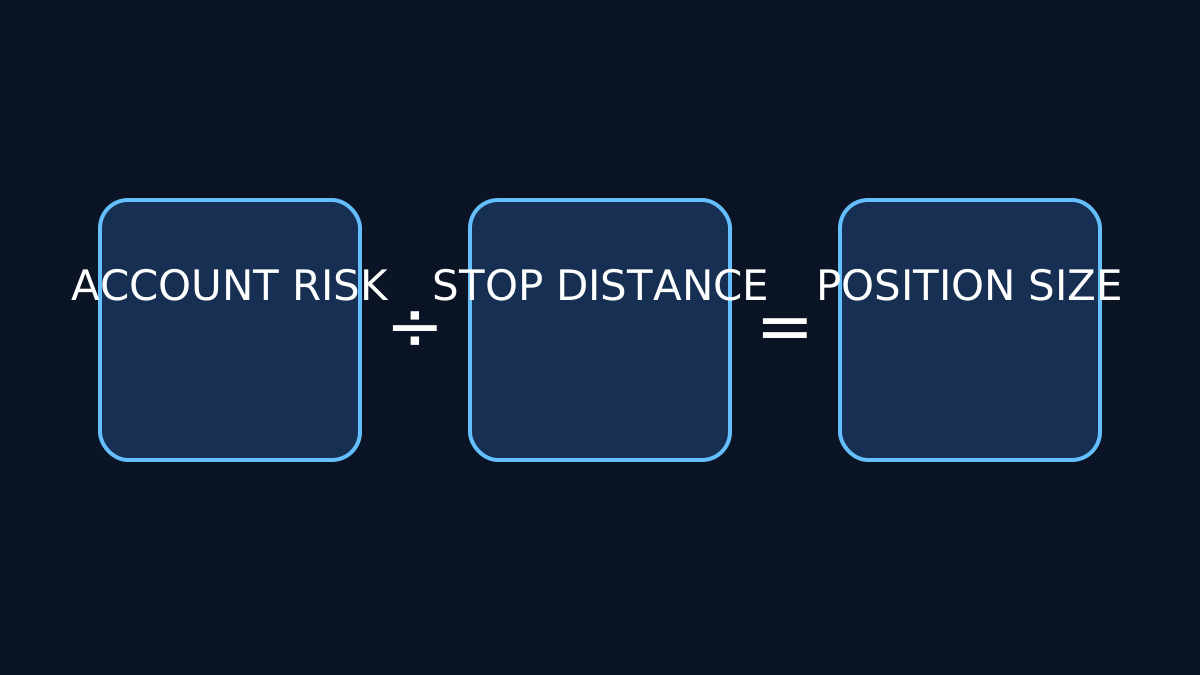
Position sizing translates risk tolerance and stop distance into the number of units to trade. The formula is:
Position Size = (Account Risk per Trade) / (Stop Distance)For example, if a trader has a $10,000 account and risks 1% ($100) per trade with a stop distance of $2, the position size is:
Position Size = $100 / $2 = 50 unitsThis means buying or selling 50 shares/contracts to keep risk within limits.
R-Multiple and Risk/Reward Versus Expectancy
The R-multiple measures the outcome of a trade relative to the risk taken (R). For instance, if risking $100 (1R) and making $300, the trade outcome is +3R.
Risk/reward ratio compares potential profit to potential loss, but it alone does not determine profitability. Instead, expectancy—the average return per trade considering win rate and payoff—is a more comprehensive metric:
Expectancy = (Win Rate × Average Win) - (Loss Rate × Average Loss)For example, a system with a 50% win rate and a 2:1 reward-to-risk ratio has a positive expectancy, but a system with a high reward-to-risk but low win rate may still be unprofitable.
Win Rate, Drawdown, and Losing Streaks
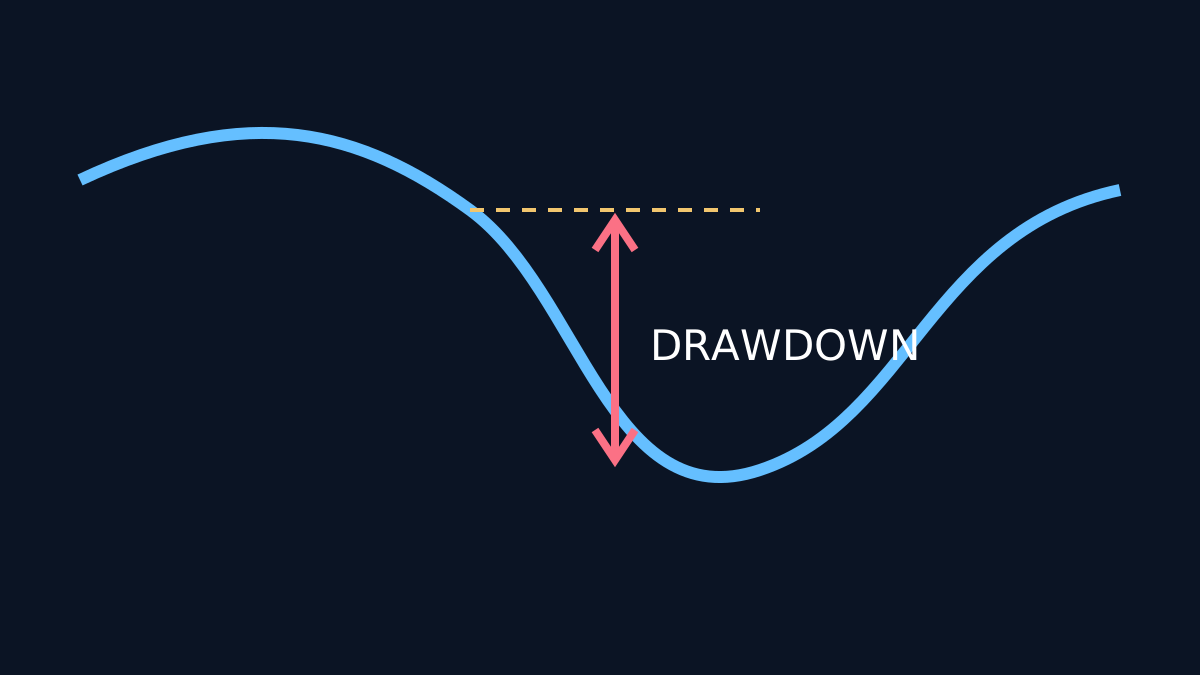
The win rate is the percentage of winning trades. Traders must understand that even profitable systems experience losing streaks and drawdowns—periods of capital decline.
Drawdowns reduce capital and can psychologically challenge traders. Managing risk per trade limits drawdown severity.
Correlation and Overexposure
Holding multiple positions with highly correlated assets increases total risk beyond individual trade calculations. For example, owning several technology stocks exposes the trader to sector-specific risks.
Traders should diversify and monitor correlations to avoid overexposure, which can amplify losses during adverse market moves.
Compounding and Leverage Misconceptions
Compounding occurs when profits are reinvested, potentially accelerating account growth over time. However, compounding also magnifies losses if risk is not controlled.
Leverage allows trading larger positions than the account size but increases risk proportionally. Misunderstanding leverage can lead to rapid losses. Proper position sizing and risk limits remain essential regardless of leverage.
Pre-Trade Checklist for Risk Management
- Define risk per trade as a percentage of the account.
- Determine stop-loss level based on market structure.
- Calculate position size using the risk and stop distance.
- Assess correlation with existing positions.
- Confirm the trade fits within total account risk limits.
- Review risk/reward ratio and expectancy.
- Ensure psychological readiness and adherence to plan.
Common Errors and Limitations
Common mistakes include risking too much per trade, ignoring correlation, moving stops impulsively, and neglecting the psychological impact of drawdowns. Risk management does not guarantee profits but aims to preserve capital and enable longevity.
Market conditions can change rapidly, so continuous evaluation and adaptation of risk parameters are necessary.
Further Learning
For more on trading psychology and advanced risk concepts, explore our articles at Trading Psychology and Advanced Risk Management Techniques.