The U.S. employment situation report, commonly referred to as the Nonfarm Payrolls (NFP), is one of the most closely watched economic indicators in global financial markets. Released monthly by the Bureau of Labor Statistics (BLS), it provides vital data on employment trends that influence monetary policy expectations, currency valuations, and commodity prices such as gold. Yet, the headline NFP figure alone does not tell the full story. This article delves into the components of the employment report, their interrelations, and the mechanisms by which surprises in these data points can ripple through forex, gold, equities, and crypto markets.
Understanding the Employment Situation Report
Establishment Payrolls vs. Household Survey
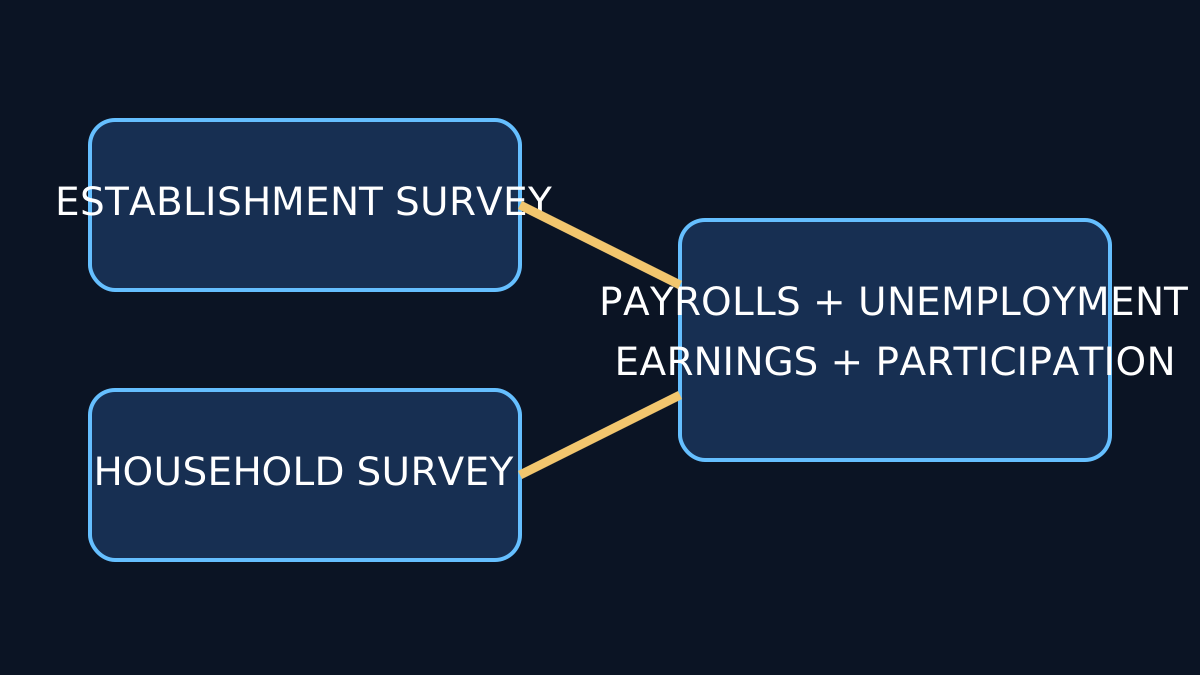
The employment situation report is composed primarily of two surveys conducted by the BLS: the establishment payroll survey and the household survey. The establishment payroll survey collects data from approximately 142,000 businesses and government agencies, covering about 697,000 worksites. It measures the number of jobs added or lost in the economy, excluding farm workers, private household employees, and nonprofit organization employees, hence the term Nonfarm Payrolls.
In contrast, the household survey interviews about 60,000 households and provides data on the employment status of individuals, including the unemployment rate, labor force participation rate, and demographic breakdowns. This survey captures a broader picture of the labor market, including self-employed workers and agricultural workers.
Key Metrics Explained
- Nonfarm Payrolls (NFP): The headline number indicating the net change in employment excluding farm and certain other sectors.
- Unemployment Rate: Derived from the household survey, it measures the percentage of the labor force that is jobless and actively seeking employment.
- Labor Force Participation Rate: The proportion of the working-age population that is either employed or actively seeking work.
- Average Hourly Earnings: Reflects wage inflation by measuring changes in workers’ average earnings per hour.
- Revisions and Benchmarking: Previous months’ data are often revised to reflect updated information, and every few years, the BLS benchmarks the payroll data against unemployment insurance records to improve accuracy.
Why the Headline NFP Number Is Insufficient
Market participants often focus on the headline NFP figure, but this can be misleading without context. For example, a strong payroll number might coincide with a rising unemployment rate if more people enter the labor force, increasing the participation rate. Conversely, a modest payroll gain with a falling unemployment rate could indicate labor market tightening.
Moreover, average hourly earnings provide insight into wage pressures that can influence inflation expectations and, consequently, Federal Reserve policy decisions. Revisions to prior months’ data can also significantly alter the perceived trend in employment growth.
Seasonal adjustments and benchmark revisions add further complexity. The BLS applies seasonal factors to smooth out predictable fluctuations such as holiday hiring or weather-related changes. Benchmark revisions, conducted annually, can result in notable adjustments to historical data, sometimes changing the narrative around labor market strength.
Impact on Federal Reserve Expectations and Financial Markets
Fed Policy Transmission Mechanism
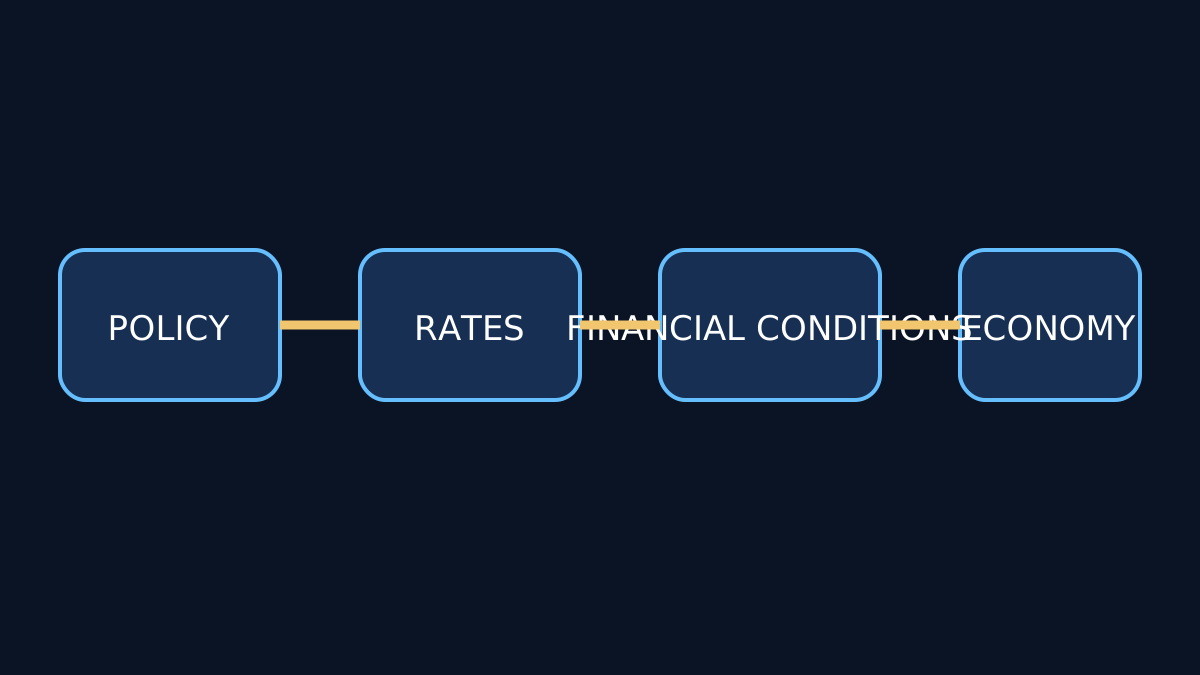
The Federal Reserve closely monitors employment data as part of its dual mandate to promote maximum employment and stable prices. Strong employment growth and rising wages may increase inflationary pressures, prompting the Fed to consider tightening monetary policy through interest rate hikes or tapering asset purchases.
Effects on Yields, USD, and Gold
Surprises in the employment report can shift market expectations about the Fed’s policy path. A stronger-than-expected NFP print or wage growth may lead to higher bond yields as investors anticipate tighter monetary conditions. This typically strengthens the US dollar, as higher yields attract foreign capital.
Conversely, gold often reacts inversely to the dollar and yields. Higher yields increase the opportunity cost of holding non-yielding assets like gold, potentially depressing prices. However, if employment data signals economic uncertainty or inflation risks, gold may gain as a safe haven.
Equities and Cryptocurrencies
Equity markets may respond positively to robust employment data reflecting economic strength but can be sensitive to the prospect of faster Fed tightening. Cryptocurrencies, while less directly linked, often exhibit volatility around major economic releases, influenced by shifts in risk sentiment and USD liquidity conditions.
Common Misinterpretations and Limitations
Investors sometimes overreact to headline numbers without considering the broader context, such as labor force participation changes or revisions. Another common error is equating payroll gains directly with economic growth without accounting for productivity or sectoral shifts.
Additionally, the NFP excludes certain employment categories, which can obscure trends in gig economy or informal labor sectors. Seasonal adjustment methodologies, while necessary, may also introduce noise in volatile periods.
Key Takeaways
- The U.S. employment situation report combines establishment payroll data and household survey data, each providing distinct insights.
- Headline NFP figures alone are insufficient; unemployment rate, participation, wage growth, and revisions are critical for a comprehensive view.
- Employment data influence Federal Reserve policy expectations, affecting bond yields, the US dollar, gold, equities, and cryptocurrencies.
- Market reactions depend on the interplay of multiple metrics and the context of broader economic conditions.
- Understanding the nuances helps avoid common pitfalls and supports more informed analysis of financial market movements.
For further reading on related macroeconomic indicators and their market impacts, see our article on inflation and monetary policy and forex market reactions to economic data.