Understanding Stop-Loss Orders: Foundations and Purpose
Stop-loss orders are fundamental tools in trading designed to limit potential losses by automatically closing a position once a predetermined price level is reached. They serve as risk management mechanisms that help traders maintain discipline and protect capital against adverse market movements.
Types of Stop-Loss Strategies
Structural Stops
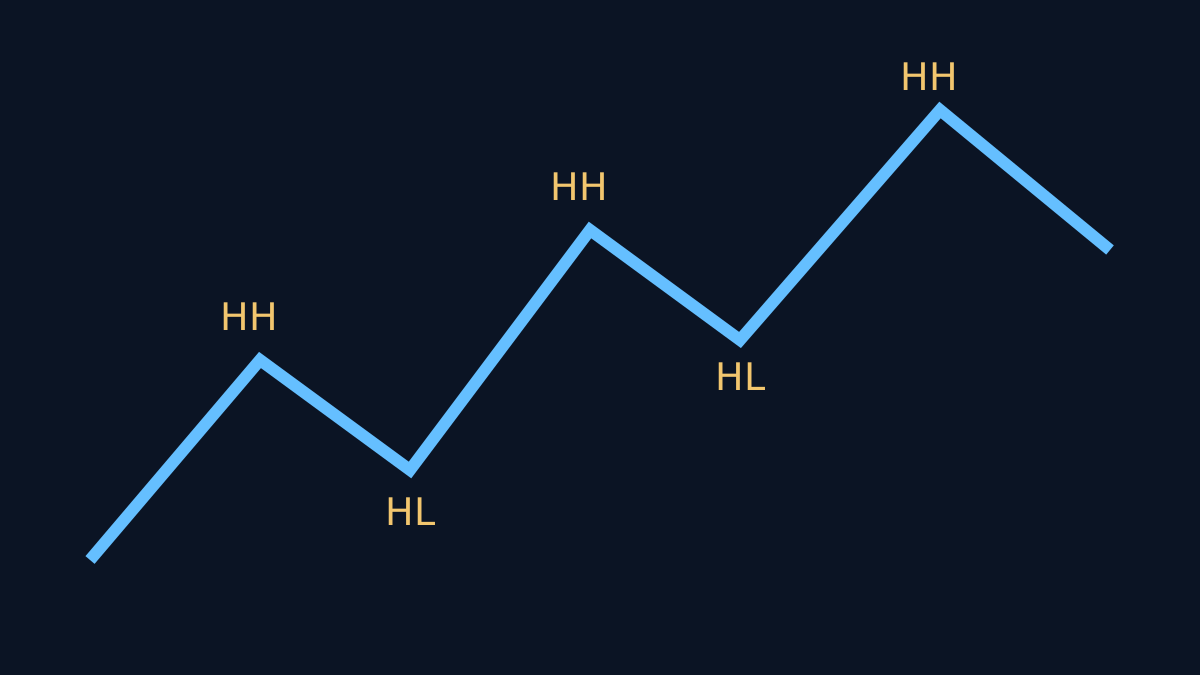
Structural stops rely on the underlying market structure, such as support and resistance levels, trendlines, or chart patterns. These stops are placed beyond key technical levels that, if breached, invalidate the trader’s original thesis.
For example, if a trader enters a long position near a support zone, placing a stop just below that support respects the principle of invalidation: a break below suggests the support has failed, and the trade idea no longer holds.
Volatility-Based Stops
Volatility-based stops adjust the stop-loss distance according to the asset’s price fluctuations, often measured by indicators such as the Average True Range (ATR). This approach accounts for normal market noise, reducing the risk of premature stop-outs in volatile conditions.
For instance, a trader might set a stop at 1.5 times the ATR below the entry price for a long position. However, while ATR captures recent volatility, it does not predict sudden gaps or slippage, which can cause execution prices to deviate from the stop level.
Time-Based Stops
Time-based stops close a position after a predetermined period if the market has not moved favorably. This method recognizes that not all trades develop as expected and avoids indefinite exposure.
While less common than price-based stops, time stops can be particularly useful in strategies sensitive to timing or when market conditions become uncertain.
Key Considerations and Limitations
Invalidation and Noise
Stops must balance between avoiding noise-induced stop-outs and ensuring invalidation of the trade thesis. Placing stops too tight risks being stopped out by normal price fluctuations, while too wide stops increase potential losses and reduce position sizing efficiency.
ATR Limitations
Although ATR-based stops adapt to recent volatility, they do not account for gaps or slippage, which can cause execution prices to be worse than the stop level. Traders should be aware that stop-loss orders do not guarantee execution at the stop price, especially in fast-moving or illiquid markets.
Gaps and Slippage
Price gaps occur when an asset opens significantly higher or lower than its previous close, often due to news or after-hours events. Slippage refers to the difference between the expected execution price and the actual fill price.
Both phenomena can cause stop-loss orders to execute at prices less favorable than intended, increasing realized losses beyond the stop level.
Stop vs. Stop-Limit Orders: Trade-Offs
A stop order becomes a market order once triggered, guaranteeing execution but not price. A stop-limit order becomes a limit order at the specified price, guaranteeing price but not execution.
Stop orders reduce the risk of missing an exit but may suffer slippage. Stop-limit orders prevent unfavorable fills but risk non-execution if the price moves past the limit.
Position Sizing and Stop Placement
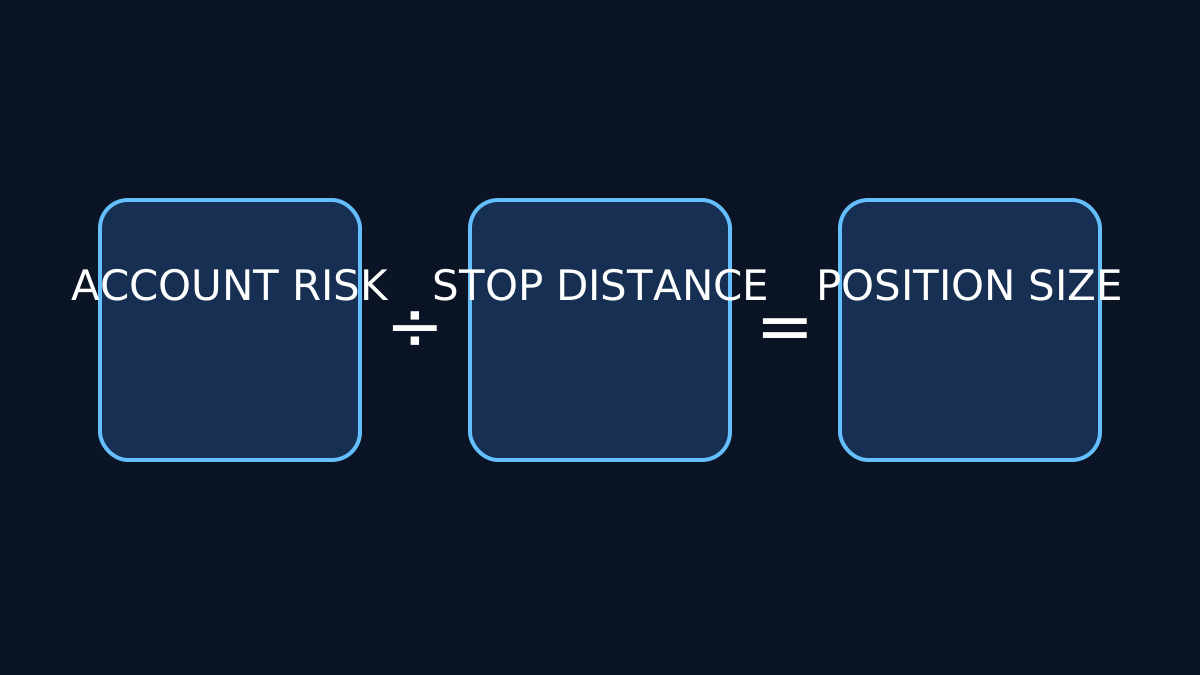
Stop-loss levels directly influence position sizing. Traders typically calculate position size to risk a fixed percentage of their capital per trade, adjusting the number of units according to the stop distance.
Break-Even and Trailing Stops
Break-Even Stops
Once a trade moves favorably, some traders move their stop to the entry price to eliminate risk. This break-even stop protects profits but can be vulnerable to normal volatility, potentially closing positions prematurely.
Trailing Stops
Trailing stops dynamically adjust the stop level as the market moves in favor of the position, locking in profits while allowing for continued upside. They can be set as fixed price distances or volatility-based measures like ATR multiples.
Common Stop-Loss Placement Errors
- Ignoring Market Structure: Placing stops arbitrarily without regard to support/resistance can lead to avoidable stop-outs.
- Overly Tight Stops: Stops placed too close to entry increase the chance of being stopped by market noise.
- Overly Wide Stops: Excessive stop distances increase risk and reduce the number of trades possible within capital limits.
- Neglecting Volatility: Uniform stop distances without volatility adjustment can be ineffective across different assets or market regimes.
- Failing to Account for Gaps and Slippage: Assuming guaranteed execution at stop price can misrepresent risk.
Hypothetical Market-Structure Examples
Consider a long trade initiated near a well-established support level. A structural stop placed just below this support respects the invalidation principle. If the price briefly dips below but quickly recovers, a volatility-based stop with an ATR buffer might have prevented premature exit.
Alternatively, in a trending market, a trailing stop set at 1.5 ATR below the highest price achieved can protect profits while allowing for trend continuation.
Conclusion
Effective stop-loss placement is a nuanced balance between protecting capital and allowing trades room to develop. Understanding the distinctions between structural, volatility-based, and time-based stops, alongside their limitations and practical trade-offs, empowers traders to tailor risk management strategies to their specific contexts.
For further reading on related risk management techniques, explore our articles on position sizing and trailing stops.
Key Takeaways
- Structural stops align with market invalidation points, such as support and resistance levels.
- Volatility-based stops adjust for market noise but do not prevent losses from gaps or slippage.
- Time-based stops limit exposure duration when price targets or conditions are unmet.
- Stop orders guarantee execution but not price; stop-limit orders guarantee price but risk non-execution.
- Position sizing must be adapted to stop-loss distance to maintain consistent risk.
- Break-even and trailing stops help lock in profits but require careful placement to avoid premature exits.
- Common errors include ignoring market structure, improper stop distances, and neglecting volatility and slippage risks.